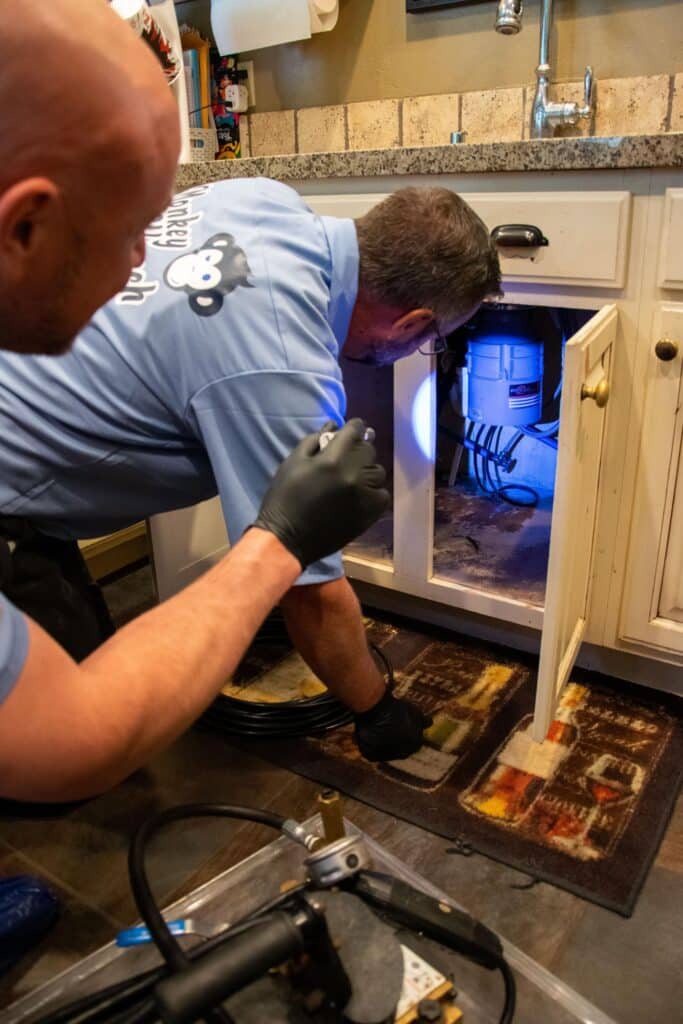
Count on our team for fast responses, upfront pricing, and quality work—because you deserve service you can trust.
You rely on your tap water every day—but have you ever had it tested? Even water that looks clear can contain minerals, chemicals, or contaminants that impact your health, damage plumbing, and shorten the life of appliances. Monkey Wrench Plumbing provides professional water quality testing in South Jordan, UT, giving homeowners clear answers about what’s flowing through their pipes.
Using advanced testing equipment and EPA-recognized standards, our licensed technicians deliver fast, accurate results—along with honest guidance on how to improve your water if needed.
Your water affects everything from cooking and bathing to long-term health. Knowing what’s in it puts you in control.
We perform detailed testing to identify common and hidden water issues found in South Jordan homes.
Calcium and magnesium buildup can clog pipes, reduce appliance efficiency, and leave residue on fixtures and glassware.
Excess chlorine can cause unpleasant taste, dry skin, and premature wear on plumbing components.
These minerals often cause rusty staining, metallic flavors, and filter blockages.
Older plumbing materials can introduce harmful metals into your water—posing serious health concerns if not addressed.
Coliform or E. coli bacteria can enter water supplies through groundwater or system breaches, especially in well systems.
Improper pH levels can corrode pipes, increase metal leaching, and lead to leaks over time.
High TDS affects taste and indicates excess minerals or contaminants in your water.

Even municipal water can vary in quality depending on infrastructure, pipe age, and local conditions. Routine water testing helps uncover:
Chemical pollutants (chlorine, lead, VOCs)
Mineral-heavy hard water
Bacterial contamination
Corrosive or imbalanced pH levels
Excess sediment or dissolved solids
If your water smells unusual, tastes off, looks cloudy, or leaves buildup behind, testing provides clarity—and peace of mind.
We keep the process simple and informative from start to finish.
1. Sample Collection
We collect water samples from key points in your home—such as the kitchen, bathroom, and outdoor spigot—for a complete overview.
2. On-Site & Laboratory Testing
Immediate testing checks for hardness, chlorine, and TDS. Additional samples are sent to certified labs for deeper chemical and bacterial analysis.
3. Clear Results Review
You’ll receive a straightforward report explaining what was found and how it affects your health, plumbing, and appliances.
4. Customized Treatment Options
If improvements are needed, we recommend practical solutions tailored to your results—no pressure, no unnecessary upgrades.
Water testing is a smart choice if you:
Recently moved into a new or older home
Notice unusual taste, odor, or color in your water
See mineral residue or scaling on fixtures
Have children, babies, or sensitive skin in the household
Plan to install a softener or filtration system
Want to reduce bottled water use and trust your tap
Many homeowners in Utah choose annual testing to maintain consistent water quality.
Depending on what we find, we may recommend:
Whole-Home Water Softeners – reduce hardness and protect plumbing
Reverse Osmosis (RO) Systems – ultra-pure drinking and cooking water
Carbon Filtration Systems – remove chlorine, odors, and chemicals
UV Sterilization Units – eliminate bacteria and microorganisms
Point-of-Use Filters – targeted filtration for specific faucets
Well Water Treatments – sediment filtration and chlorination
We only recommend what your water actually needs—nothing more.
“It was a smooth process from start to finish. I was grateful to get an estimated price over the phone for a simple drain cleaning. Friendly and professional staff.”
-Alan D.
“Corey was very communicative about the issue and possible solutions and hleped me understand which path forward would be best…. My Kitchen sink drains better than ever. Thanks Corey!”
-Eric W.
“Corey came by this morning to help clear a clogged bathtub drain. he was friendly, knowledgeable, and fixed the issue quickly. I would 100% recommend!”
-Valerie D.
Water quality contaminants can significantly impact both health and plumbing systems. Common contaminants include heavy metals, bacteria, and chemical pollutants that may not be visible to the naked eye but can pose serious health risks if left unchecked.
For instance, lead can leach into drinking water from old pipes, while bacteria such as E. coli can indicate serious sanitation issues. Regular testing helps identify these hazards, allowing homeowners to take preventative measures and ensure their water is safe for consumption.
Routine water testing is essential for maintaining the quality of your home’s water supply. It allows homeowners to monitor changes in water quality over time and catch potential issues before they escalate into serious problems.
For example, if a homeowner notices a sudden change in taste or odor, a routine test can quickly identify the cause, whether it be chemical pollutants or biological contaminants. This proactive approach not only protects health but also extends the lifespan of plumbing systems and appliances.
Selecting the appropriate water treatment system is crucial for addressing specific water quality issues identified during testing. Different systems target different contaminants, and understanding your water's unique needs is key to effective treatment.
For instance, if hard water is detected, a water softener may be recommended, whereas high levels of chlorine might necessitate a carbon filtration system. Consulting with professionals ensures that homeowners invest in the right solutions tailored to their water quality results.
The quality of water not only affects individual households but also has broader environmental implications. Contaminated water can harm local ecosystems, affecting wildlife and plant life in nearby bodies of water.
Moreover, improper disposal of chemicals and pollutants can lead to water supply contamination, impacting entire communities. By ensuring proper water quality through testing and treatment, homeowners contribute to the health of their local environment and promote sustainable water practices.