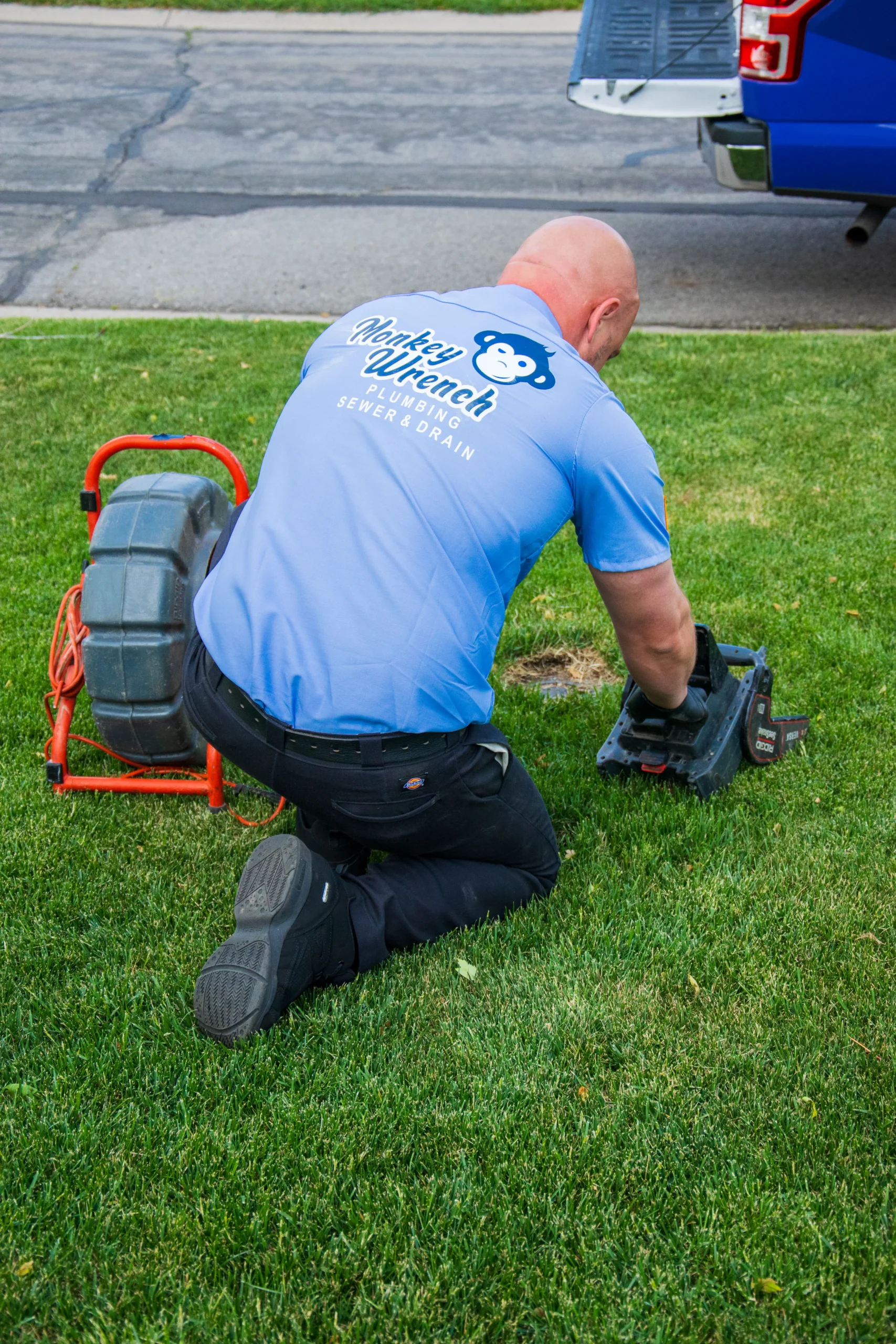

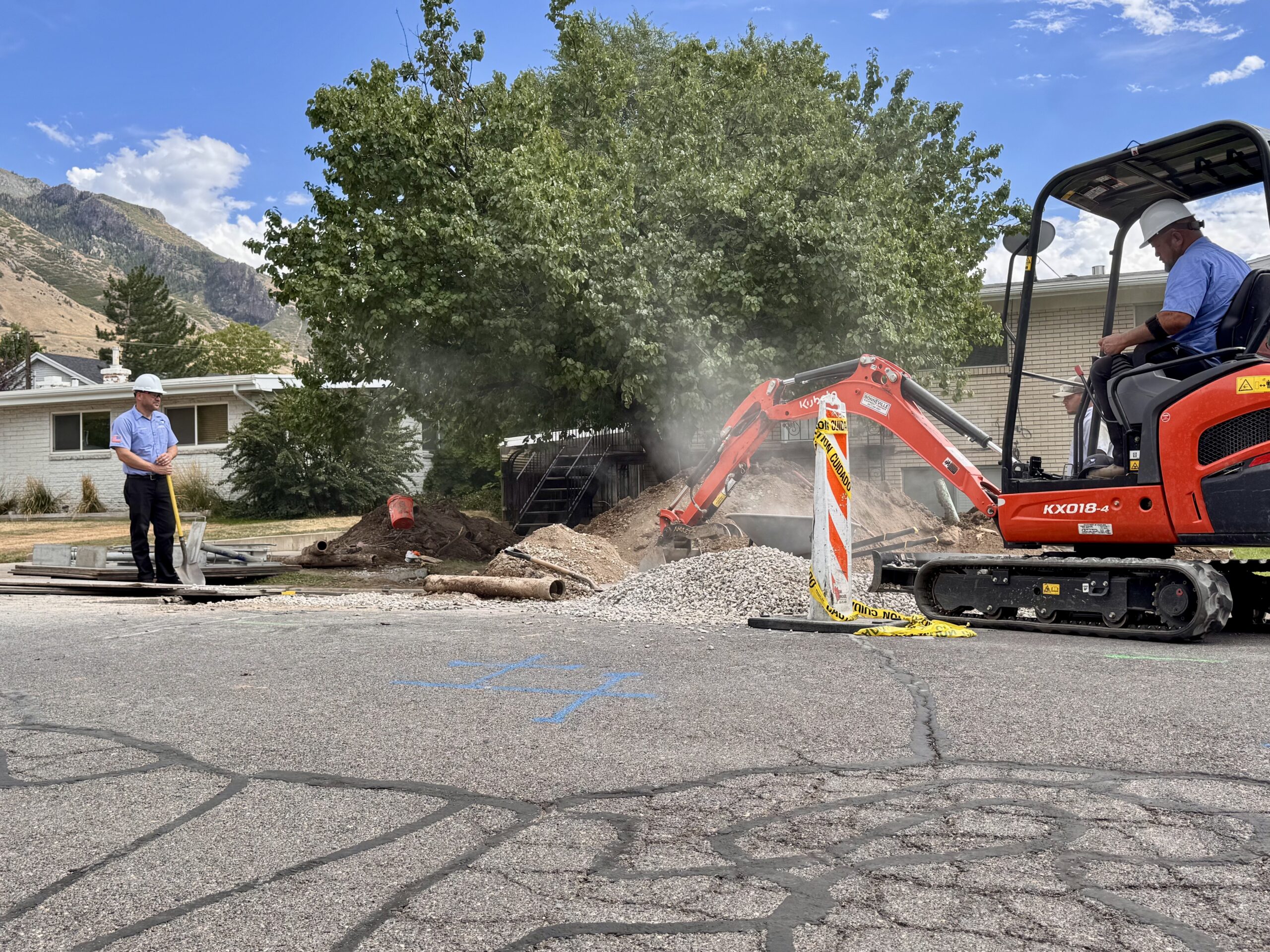
Every so often a job lines up in a way you could not script. This one was a full sewer line replacement in an older Provo neighborhood, on a street tucked right up against the BYU mountain — and the crew lead running it was Christopher, a lifelong Utah Utes fan.
Spending over a week digging a trench in the shadow of the Y is not where he pictured his fall starting. He took it well. The homeowner got a brand new sewer line, and Christopher got a great story.
Here is what the job actually involved, what came out of the ground, and why it matters if you own an older home anywhere in Utah County.
Why Older Provo Homes Run Into Sewer Trouble
Provo has a lot of well-built older housing, and that is exactly why we see the sewer problems we do. The pipe running under the yard is usually as old as the house itself, and depending on the decade it went in, it was made of one of these:
- Clay tile — standard in homes built before the 1950s. It holds up under compression, but it is brittle, and every joint between sections is an opening tree roots can find.
- Asbestos cement, usually called transite — widely used for sewer laterals through the mid-1900s because it was light, inexpensive and would not rust. It does not corrode like metal; it degrades and scales up from the inside instead.
- Cast iron — used heavily from the 1920s into the 1970s. It corrodes from the inside out, so by 50 to 70 years the usable bore can be a fraction of what it started as.
- Orangeburg — tar-impregnated wood fiber pipe, common from the 1940s into the 1970s. It was cheap and fast to install, and it deforms into an oval and collapses. With Orangeburg it is a question of when, not whether.
- Early PVC and ABS — a big improvement, but still vulnerable to shifting soil, poor bedding, and bad slope from the original install.
Add Utah’s freeze-thaw cycles, our shifting soils, and mature trees hunting for the most reliable water source in the yard, and you have the conditions behind most of the sewer calls we run in Utah County.
What Came Out of the Ground
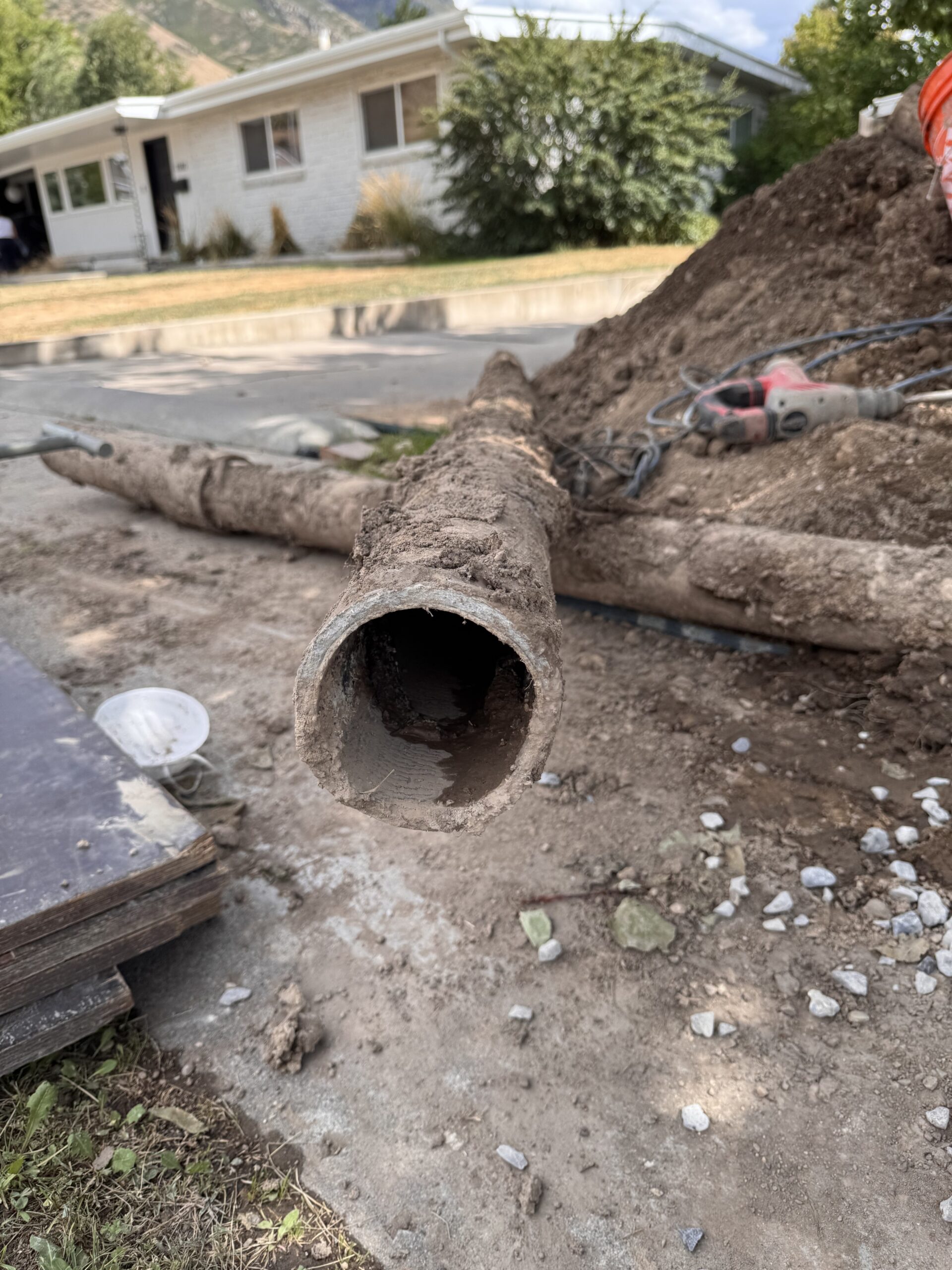
The original line here was asbestos cement pipe — transite. One look at the cut end explains the recurring backups better than any description could: what should be a smooth, round, open bore had closed down to a narrow channel, choked with hardened buildup around the entire inside wall.
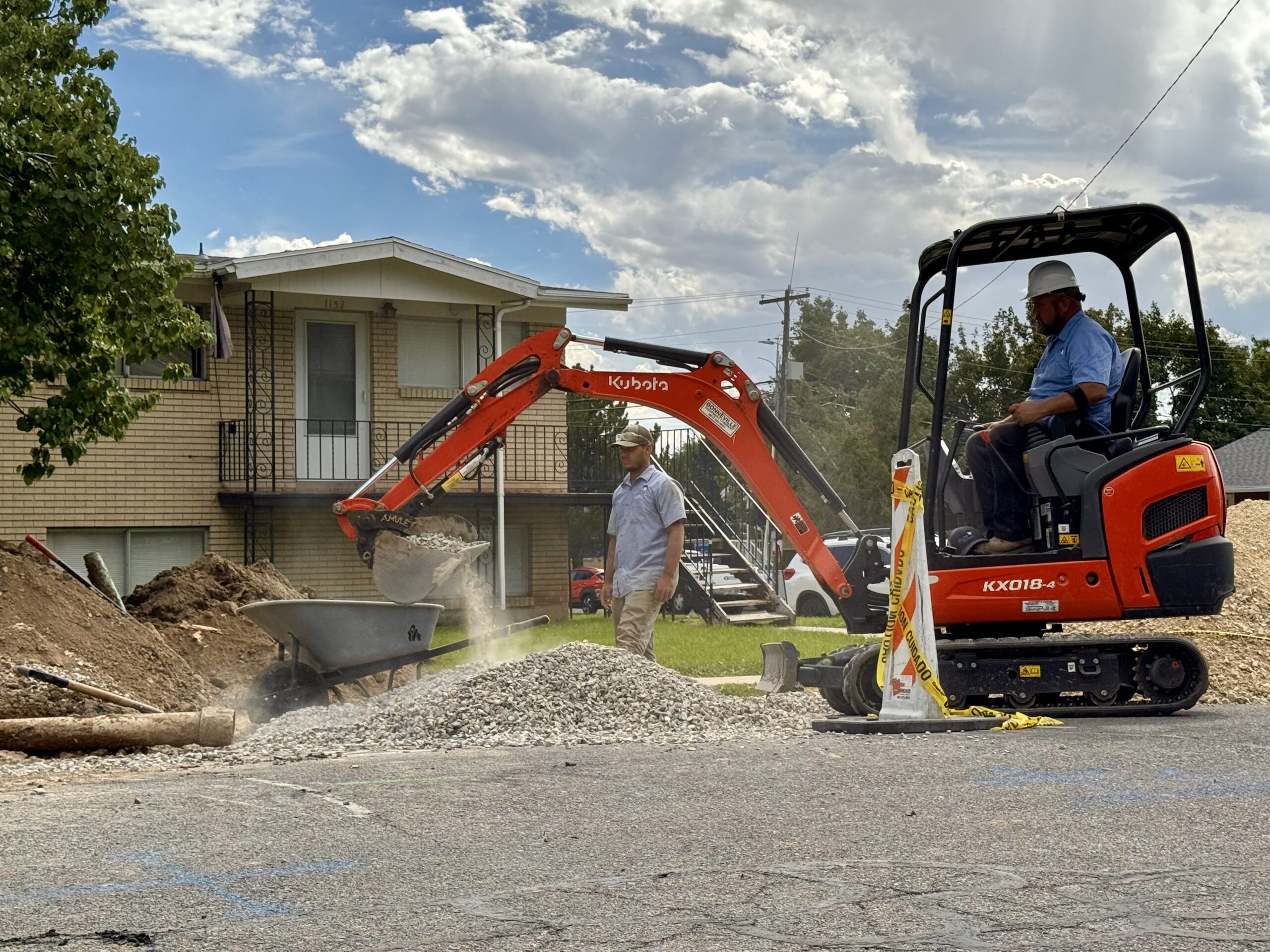
There was also more of it than a typical single-family run. This property is two units that share a yard, and their laterals met before heading out to the street together — 35 feet of pipe in total, sitting eight to nine feet down at the deepest point. Deep enough, and far enough out, that the work reached the road: the crew had to cut into the asphalt and run the job under traffic control rather than staying inside the property line.
That is not something a cable machine fixes. You can snake a line like this and get flow back for a while, but the pipe itself is the problem — there is simply not enough open pipe left to move what a household puts through it.
Snaking a line clears the symptom. It does not fix the pipe. If a drain has backed up more than once in the same place, cabling it again is buying time — not solving anything. That is the moment to put a camera down the line and find out what you are actually dealing with.
The Replacement
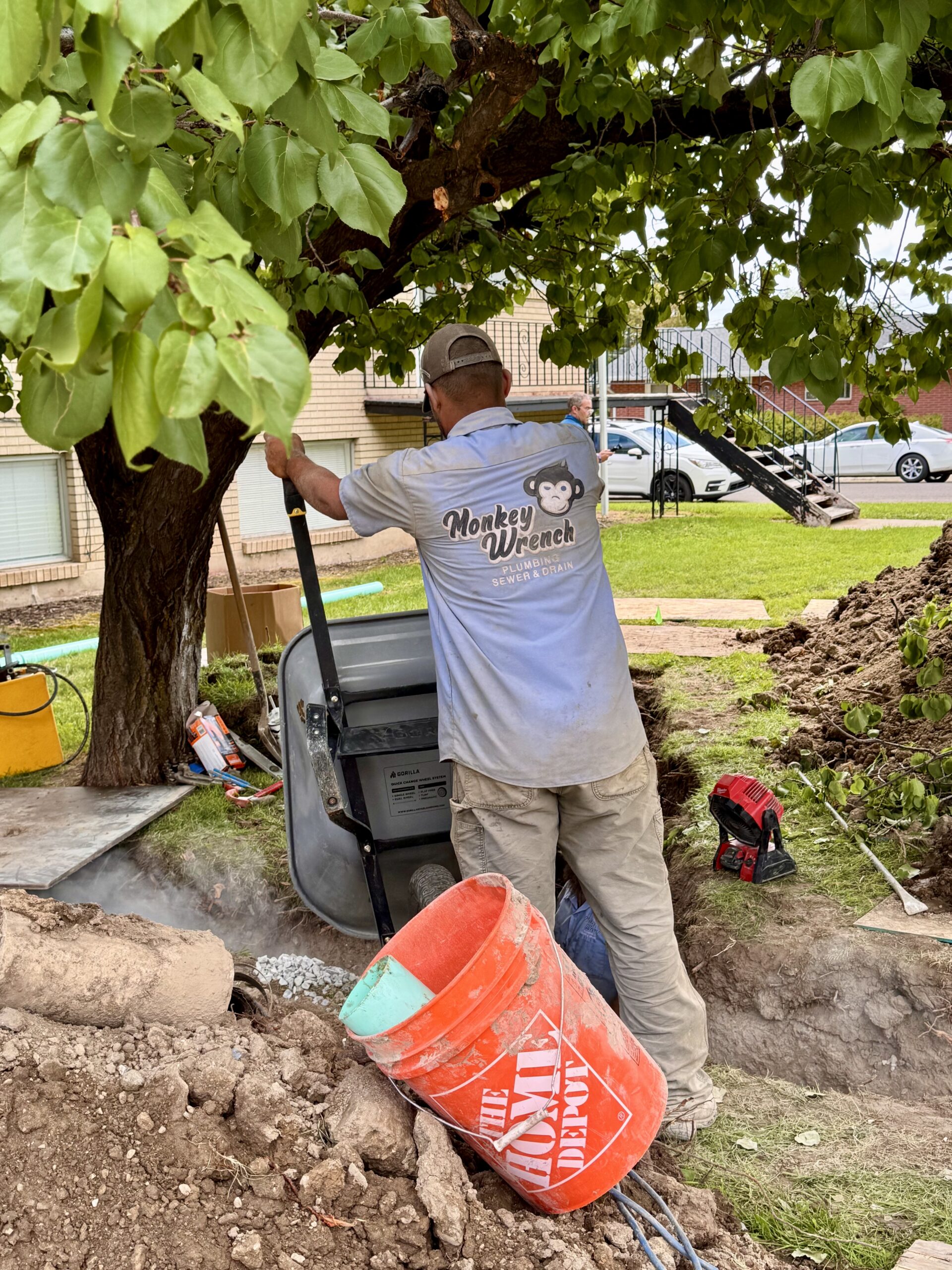
Once the old line was out, the trench got prepped properly before any new pipe went in. That part matters more than most homeowners realize: a sewer line lives or dies on its bedding and its slope. Pipe laid straight onto rocky native soil, or set at an inconsistent grade, will fail early no matter how good the pipe is.
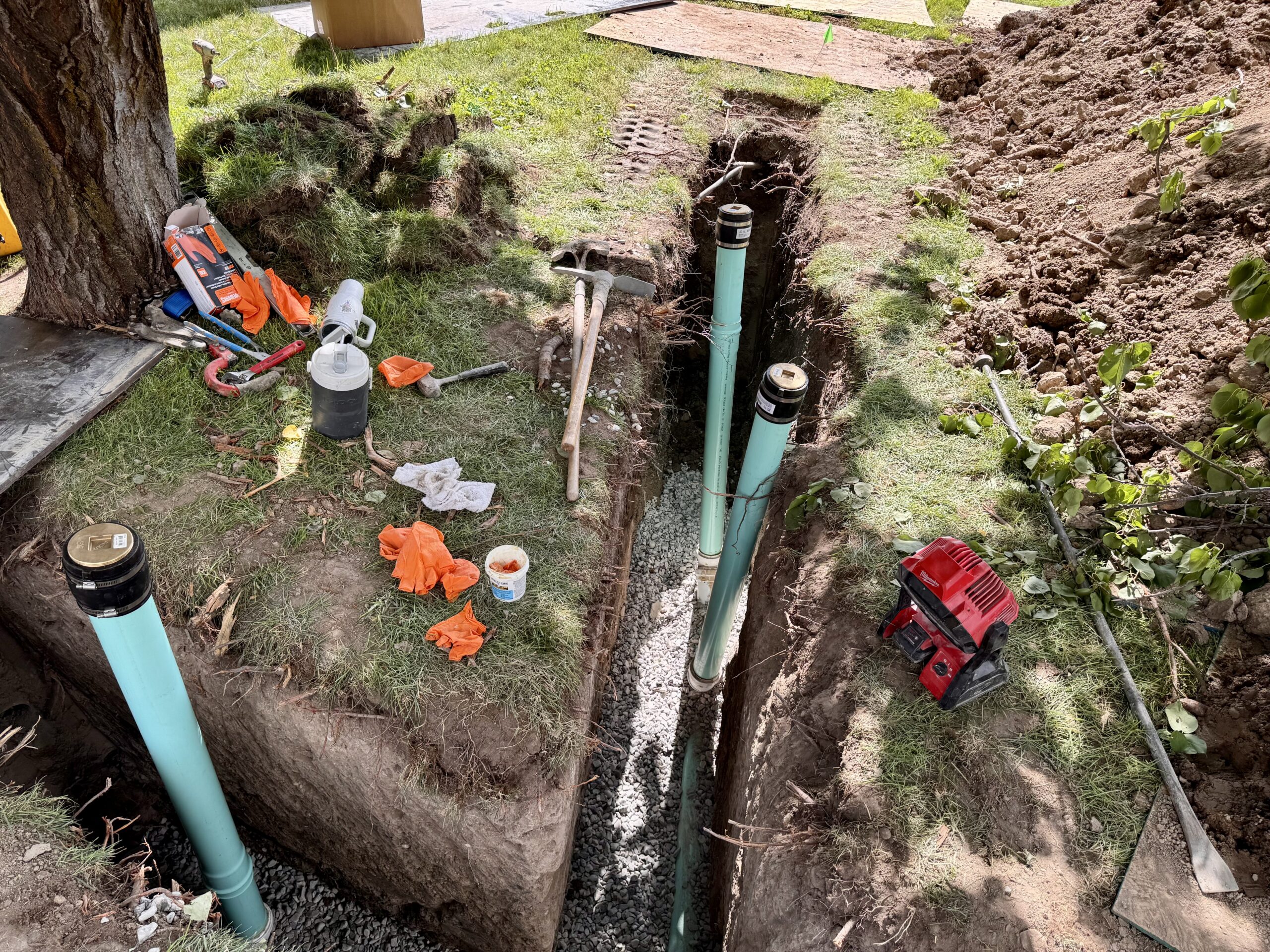
The new line is green PVC sewer pipe, bedded in gravel and set to a consistent fall. We also installed a cleanout riser for each of the two units — so the next time anyone needs to inspect or service either line, they have direct access to it without digging up the yard again.
At eight to nine feet, with a road cut involved, this was not a quick afternoon job. The crew was on site for over a week, and the work was permitted and approved by Provo City — which is what you want on a dig that touches the public right of way. The sod was cut and set aside at the start so the yard could be put back together, and the whole work zone stayed barricaded and marked while the excavator was running. Underground work is disruptive by nature. Leaving a property better than the crew found it is the part that separates a good dig from a bad one.
Warning Signs Worth Taking Seriously
Sewer failures almost always announce themselves before they become an emergency. If you notice any of these, it is worth getting a camera down the line:
- More than one drain running slow at the same time
- Gurgling from a toilet when the washing machine drains
- A sewage smell in the yard, the basement, or near a floor drain
- A patch of lawn that is greener, softer, or starting to sink
- Repeat backups in the same spot, even after the line has been snaked
- Any home over 40 years old whose sewer line has never been scoped
Why Utah Rooter Handled the Dig
Underground work is its own trade. Excavation, sewer replacement, and rooter service call for different equipment, different training, and different crews than the plumbing inside your house — which is why we run that side of the business as Utah Rooter, our dedicated underground department.
On a Utah County job like this one, that is the team on the shovel. If you are in Provo, Orem, Lehi, or anywhere on the south end of the valley, Utah Rooter handles sewer, drain and rooter service in Provo directly.
Same ownership, same standards, same crews we would send to our own families’ homes — just the specialists for everything that happens below the surface.
If You Own an Older Home, Start With a Camera
This homeowner did the right thing. They stopped treating a recurring backup as a nuisance and had someone actually look at the pipe. That is the whole lesson here.
A sewer camera inspection takes under an hour and tells you exactly what you are working with: the material, the condition, the slope, and whether roots have found a way in. Set against the cost of an emergency excavation, it is the cheapest hour you will ever spend on your house.
It is also the smartest thing you can do before buying an older home in Utah County. We would far rather scope a line for you in advance than dig one up in a crisis.
Worried About the Sewer Line at Your Provo Home?
Whether it is a recurring backup, a smell you cannot place, or an older home that has never been inspected, we can tell you exactly what is happening under your yard before it turns into an emergency.
Monkey Wrench Plumbing & Drain and Utah Rooter serve Provo, Orem and all of Utah County.